

Materiality Assessment
MR. D.I.Y. reviews material sustainability topics relevant to the business and its stakeholders on an annual basis, with reference to GRI 3: Material Topics (2021), to ensure that its sustainability management remains aligned with the business context and stakeholder expectations.
Process for Determining Material Sustainability Topics
Identification of Topics and Reporting Boundaries

The Company considers sustainability topics related to its business operations, both internally and externally, by linking them to the value chain, stakeholders, and relevant international standards in order to define the scope of the materiality assessment across the economic, social, environmental, and governance dimensions.
Assessment and Prioritisation

The Company gathers views from stakeholder groups through interviews to reflect sustainability topics that are important to the business and its stakeholders, including opportunities and impacts that may arise from business operations. The information obtained is then analysed and used to prioritise the topics in order to define management approaches.
Review and Validation of the Materiality Assessment Results

The results of the materiality assessment are reviewed by senior management, the Sustainability Working Team, and the Corporate Governance and Sustainability Committee before being proposed to the Board of Directors for consideration, to ensure that the identified topics are aligned with the Company’s business direction and sustainability approach.
Review for Continuous Improvement

The Company uses the results of the materiality assessment to review and further develop its operational approach on an ongoing basis. It also monitors information and feedback from stakeholder groups to support the improvement of sustainability issue management in line with the changing business context.
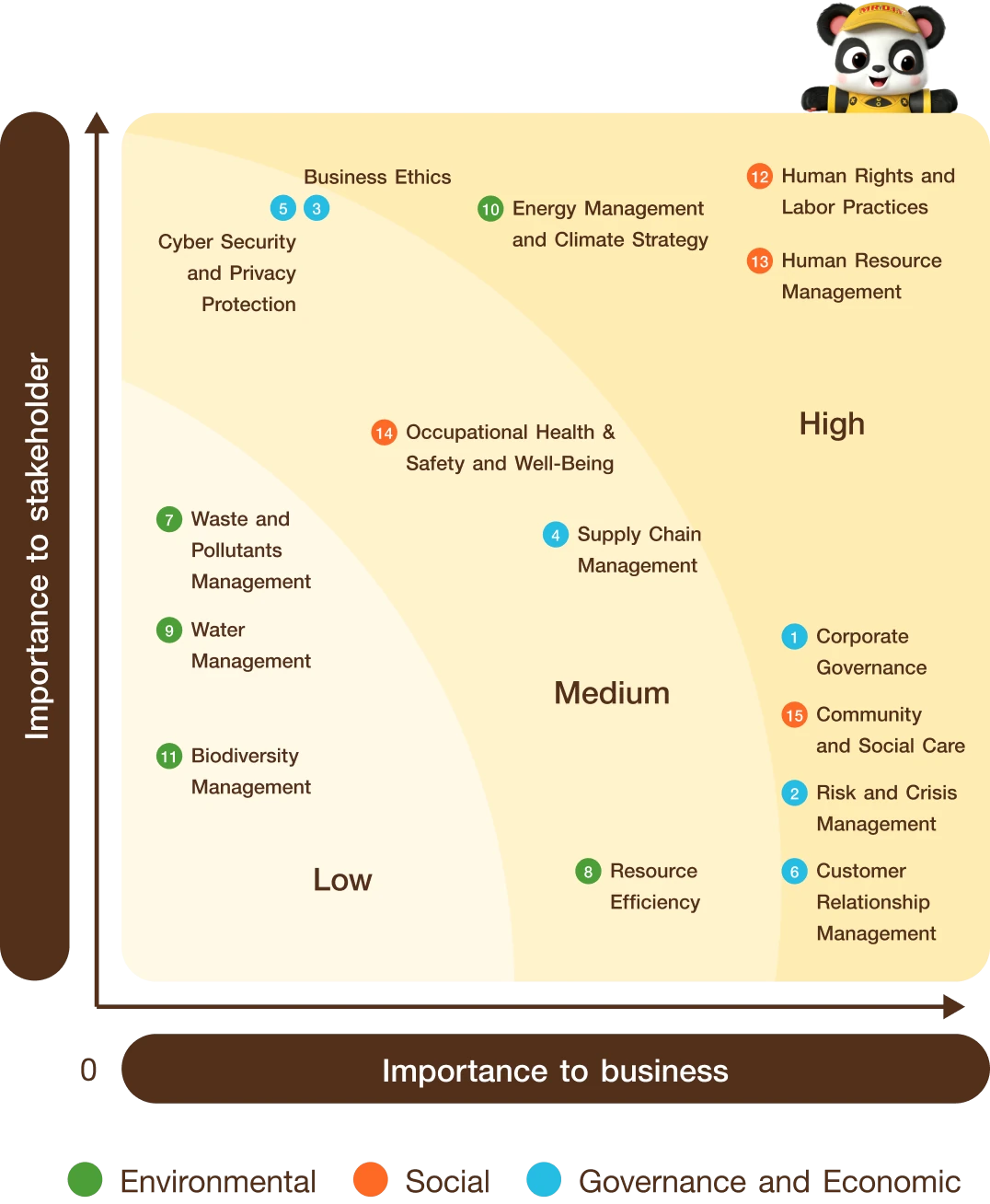
-
1Corporate Governance
-
2Risk and Crisis Management
-
6Customer Relationship Management
-
10Energy Management and Climate Strategy
-
12Human Rights and Labor Practices
-
13Human Resource Management
-
15Community and Social Care
-
3Business Ethics
-
4Supply Chain Management
-
5Cyber Security and Privacy Protection
-
8Resource Efficiency
-
14Occupational Health & Safety and Well-Being
-
7Waste and Pollutants Management
-
9Water Management
-
11Biodiversity Management
