
Environmental Management and Resource Utilization

Supporting the SDGs Goals


Goals and Performance Highlights
Reduce carton box usage intensity by more than
Reduce plastic bag usage intensity by more than
In 2025, carton box usage intensity decreased by
In 2025, plastic bag usage intensity decreased by
Stakeholders Directly Impacted
Customers
Employees
Government Agencies
Communities and Society


Commitment, Challenges, and Opportunities
The Company recognizes the importance of environmental management and efficient resource utilization as key factors for sustainable business operations. Although the retail business does not directly use resources in manufacturing processes, the expansion of stores and business activities may still create environmental impacts, particularly in resource consumption, waste management, and varying patterns of resource use across locations. These are all issues to which the Company continues to give close attention.
At the same time, the Company views efficient resource utilization as an important opportunity to reduce waste, improve operational efficiency, and enhance environmental management standards consistently across the organization. The Company therefore promotes waste and waste management practices based on the 9Rs, together with efforts to reduce single-use plastic packaging, monitor water consumption on an ongoing basis, and foster responsible resource-use behavior among employees, in support of stable and sustainable long-term growth.
Management Approach and Value Creation
Waste Management
MR. D.I.Y. places importance on managing waste generated from its internal operations in order to support efficient resource use and reduce environmental impacts. The Company is currently developing its operating approaches and related data-tracking systems to enhance the efficiency and systematic management of waste, in line with circular economy principles over the long term.
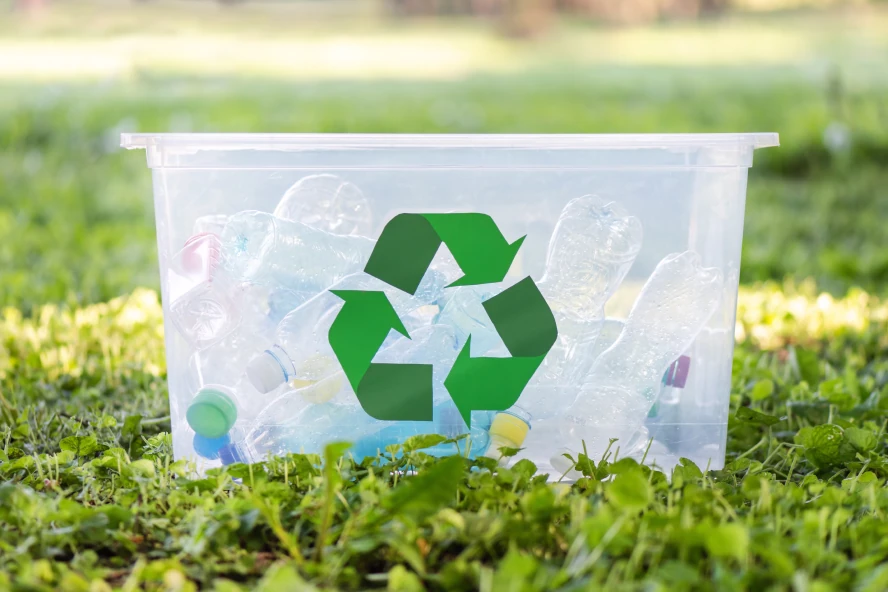
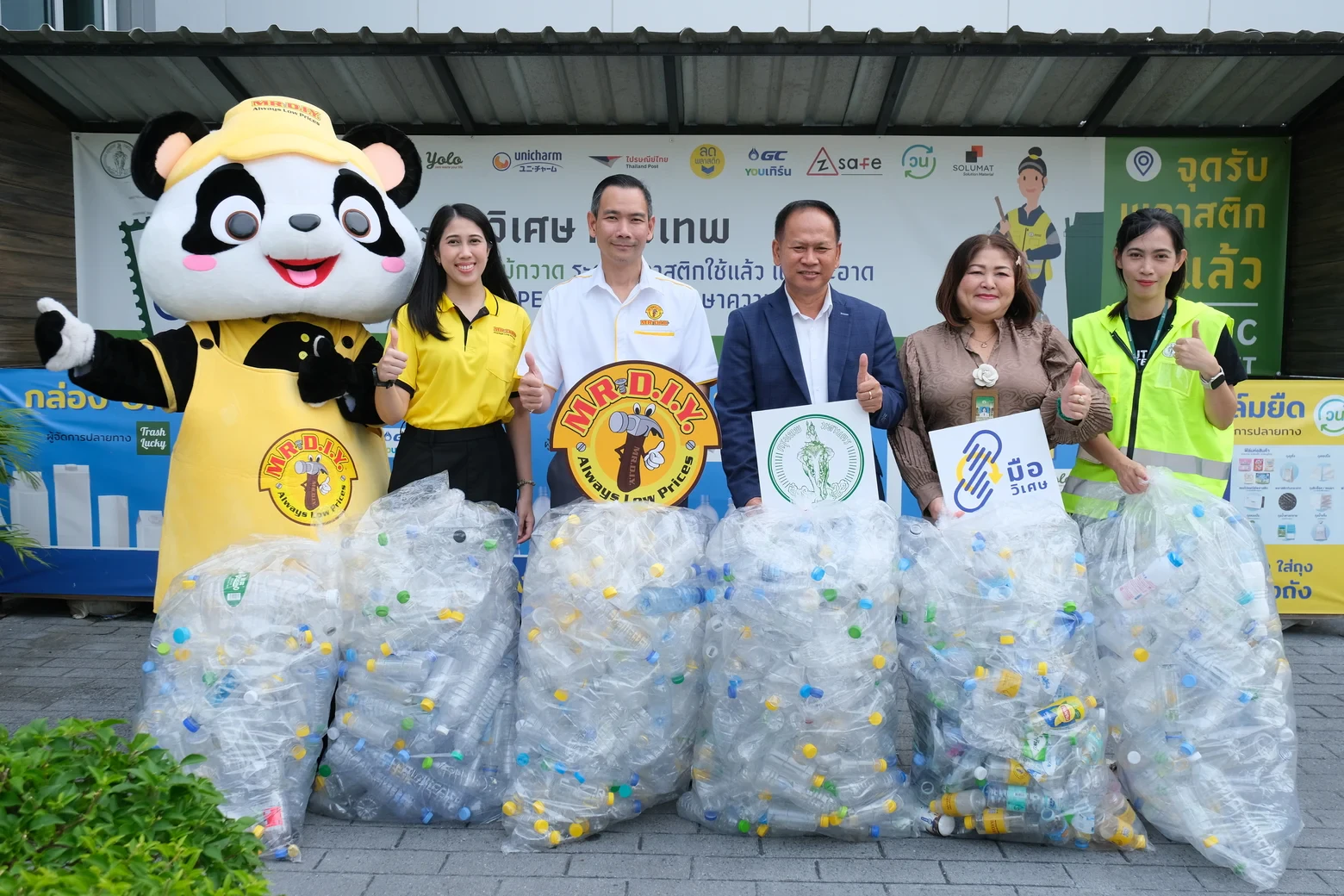
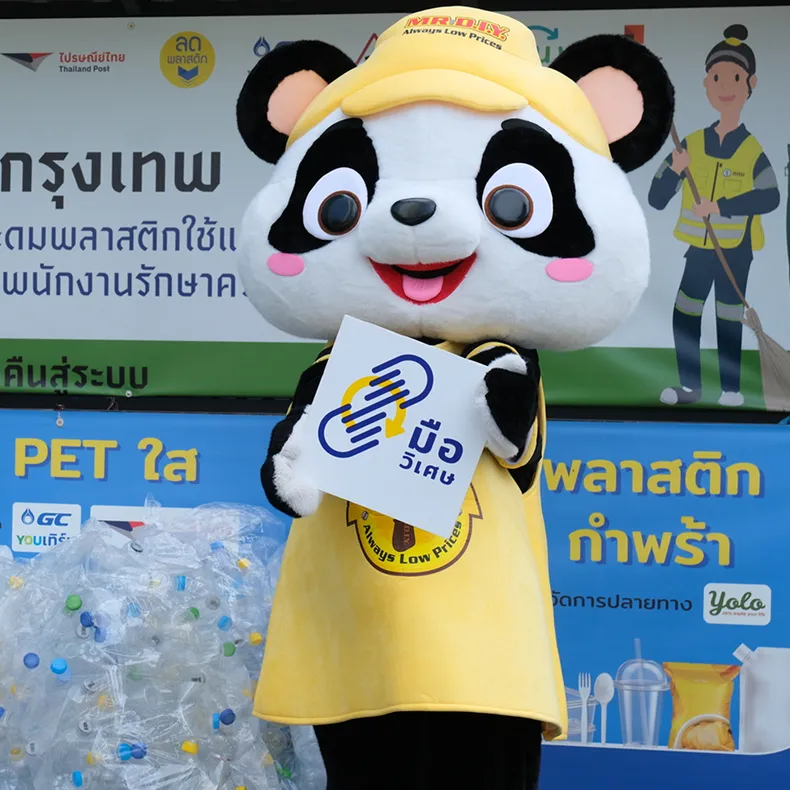
In addition, the Company promotes efficient resource utilization by recovering and reusing certain materials, such as recycling plastic bottles and reusing carton boxes used for product deliveries to stores. Each carton box can be reused approximately 8–10 times on average, helping reduce the use of new paper resources. When carton boxes are no longer suitable for reuse, the Company sells them for further recycling.
For hazardous waste, the Company appoints licensed waste contractors approved by the Department of Industrial Works to ensure proper transportation and disposal in compliance with applicable laws and technical standards. At the same time, the Company is gradually strengthening its approach to managing organic waste and general waste to support long-term waste reduction.
At the store level, the Company uses biodegradable plastic bags and provides bags only for purchases of THB 250 or more. This measure is intended to encourage customers to reduce single-use plastic bag consumption and shift to reusable bags or personal bags instead.
Performance
MR. D.I.Y. has begun tracking waste generated from its operations, covering both non-hazardous waste and hazardous waste, to support appropriate waste management and compliance with relevant requirements. The data also forms part of the Company’s ongoing development of its environmental data system to support future monitoring and improvements in waste management performance.
| 2023 | 2024 | 2025 | |
|---|---|---|---|
| Hazardous waste | 3,660 | 4,603 | 3,812 |
| Non-hazardous waste | 29.5 | 41.6 | 43.1 |
| Total (Metric Tons) | 3,689.5 | 4,644.6 | 3,855.1 |
Notes
- The current data boundary covers the Central Distribution Center, while the Company is exploring approaches to expand data collection to other areas in the future.
- Within the current boundary, non-hazardous waste covers carton boxes only.
Efficiency Indicators
MR. D.I.Y. continues to grow through store expansion and an increasing number of transactions. The Company therefore monitors the intensity of packaging used in its operations, including plastic bags and used carton boxes, using the number of transactions as the basis for assessment. This helps reflect the efficiency of resource use and serves as preliminary reference data for developing more efficient packaging practices in the long term.

Performance
| 2023 | 2024 | 2025 | |
|---|---|---|---|
| Number of Transactions | 76,779,439 | 97,796,462 | 121,157,914 |
| Plastic Usage Intensity (kg / 1,000 transactions) | 3.0 | 2.7 | 2.5 |
| Carton Box Usages Intensity (kg / 1,000 transactions) | 47.7 | 47.0 | 31.4 |
Notes
- For carton boxes, the Company uses the weight of used carton boxes returned from stores and removed from the system as preliminary reference data.
- For plastic bags, the Company uses purchase volume as preliminary reference data for tracking packaging usage trends.

Water Management
MR. D.I.Y. uses water in office premises, distribution centers, and stores nationwide. Stores located within shopping centers use water supplied through the shopping centers’ management systems, while stand-alone stores under the Company’s responsibility consume water in limited quantities, mainly for restroom use and basic daily activities at each store.
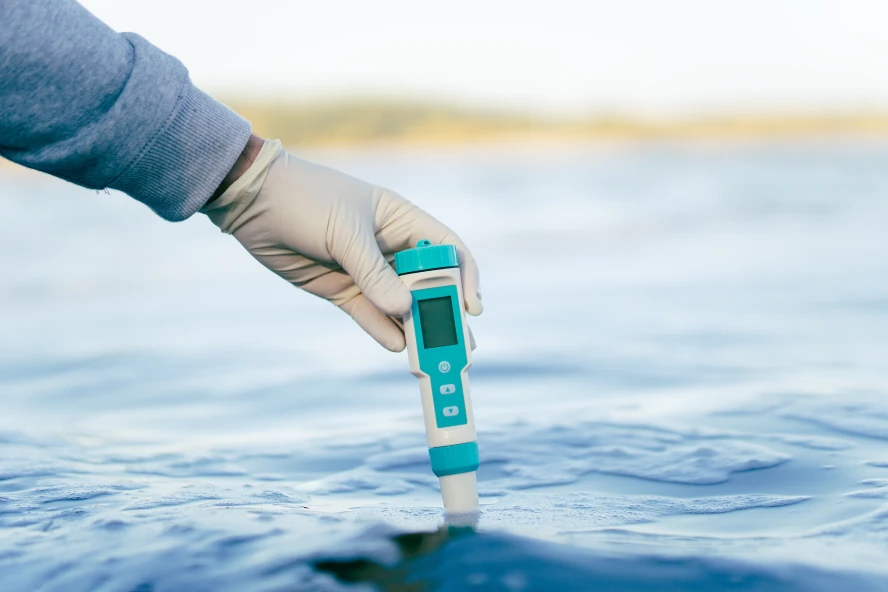
The Company promotes responsible water use through internal communication and ongoing awareness campaigns, while also assessing water stress in each area to monitor local conditions and reduce the likelihood of business operations affecting surrounding communities. In addition, more than 90% of stand-alone stores have been equipped with water-saving sanitary ware, together with regular inspection and maintenance of water systems, to support efficient long-term water use.
Water Consumption
MR. D.I.Y. began collecting and monitoring water consumption data within the currently available reporting boundary for the first time in 2025. This data serves as baseline information for developing the Company’s water management approach going forward.
| Unit | 2025 | |
|---|---|---|
| Total Water Withdrawal from All Areas | Cubic meters | 32,204.00 |
| Total Water Withdrawal from Areas in Water Stress | Cubic meters | 31,956.00 |
Notes
- The reporting scope includes (1) the Head Office of the Company at WHA tower 12th, 12Ath floor, (2) the Head Office of STG at Bhiraj Tower at BITEC 14 th floor, (3) the three-storey office building (MDTT/MDKK), (4) the Central Distribution Centre, (5) the Regional Distribution Centres, (6) KM.21 Distribution Centre
- Areas currently identified as having high water stress include: (1) the three-storey office building (MDTT/MDKK), (2) the Central Distribution Centre, (3) the Regional Distribution Centres at Tak Province (4) the Regional Distribution Centres at Nakhon Ratchasima Province (5) KM.21 Distribution Centre

Biodiversity Management
The Company recognizes the importance of biodiversity and ecosystems to the environment, local communities, and business continuity. It is therefore committed to preventing and minimizing impacts arising from its existing operations and potential future expansion into new locations. In doing so, the Company considers both its impacts on nature and its dependencies on natural resources, including potential interactions with protected areas and areas of high biodiversity value, while supporting the conservation and restoration of natural resources.
The Company applies the Mitigation Hierarchy in accordance with the AR3T Framework, prioritizing actions to Avoid, Reduce, Restore and Regenerate, and Transform. For locations or activities identified as having significant biodiversity-related risks, the Company will establish appropriate action plans, mitigation measures, responsibilities, performance indicators, and monitoring processes. The Company also collaborates with government agencies, local communities, and relevant organizations to identify and monitor areas for conservation and restoration, including reforestation, increasing green spaces, ecosystem restoration, and raising awareness of biodiversity conservation. These efforts aim to create long-term shared value for the environment, communities, and the business.
In 2025, the Company conducted an assessment of biodiversity-related risks covering its own operations using the WWF Biodiversity Risk Filter developed by the World Wide Fund for Nature (WWF). The assessment was undertaken to identify and evaluate biodiversity-related risks that may be associated with the Company’s operating locations, including risks arising from dependencies on natural resources and potential impacts on ecosystems. The assessment results will be used to support the Company’s consideration of appropriate risk management approaches, as well as the development of measures to monitor and mitigate biodiversity-related impacts.